
English| EUR
Suggested for you
More currencies
Choose a language
Rome sells its snacks from bakery windows, fryer counters and market stalls rather than ticket desks, which makes costs harder to pin down than opening times. This Rome street food prices guide explains how independent vendors set what they charge, what pushes a total up or down, and which districts still keep the cheap plates. Expect named places and real examples rather than vague averages.
Quick answer
Street food in Rome carries no entrance fee — 0 EUR — because every item is sold directly by individual vendors who set their own price per piece. What you pay depends on the district, the item and whether you eat standing at the counter or sit down, since table service is billed differently. Supplì, pizza al taglio and maritozzi sit at the cheaper end.
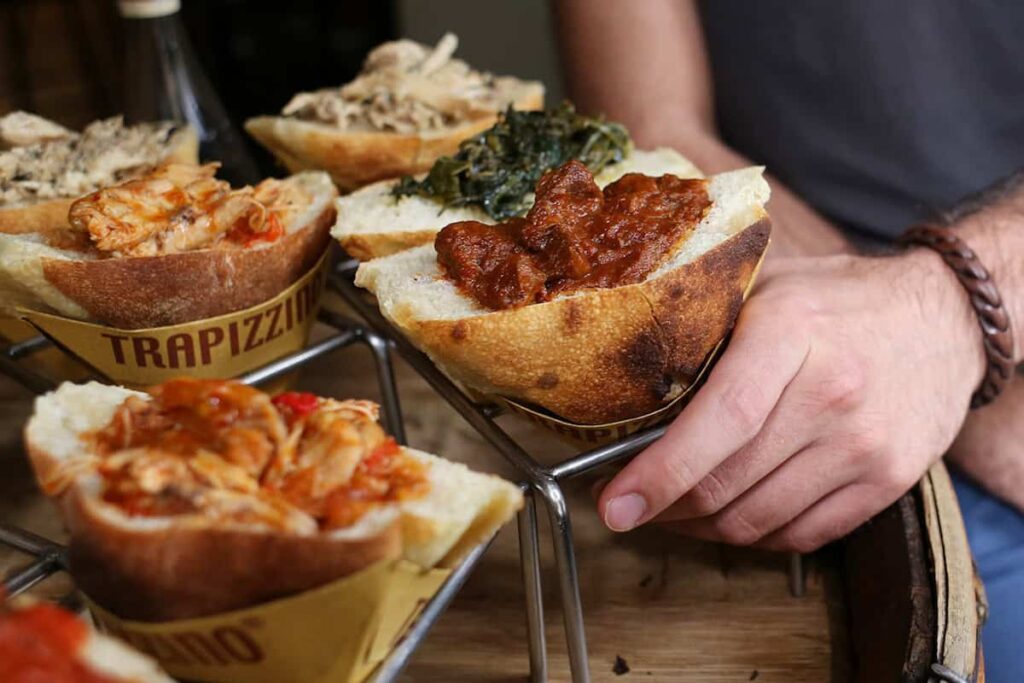
Pizza al taglio is not sold by the slice. It is cut to order and weighed, priced per etto — 100 grams — so the number on the scale, not the shape of the piece, decides what the customer pays. That single mechanic explains why Rome street food prices resist neat tables: the same bakery can hand two people very different totals for what looks like the same lunch. The city has no single authority setting what a counter charges. Every vendor is independent, which is why geography does more work than any menu. A friggitoria in Testaccio, a bakery window in Monti and a kiosk facing a monument on the tourist route operate in different economies, even when the supplì is identical. Proximity to the Pantheon, Piazza Navona or the Trevi Fountain tends to be the strongest single variable. The other is posture: Italian bars bill differently for food eaten standing al banco than for the same plate carried to a table, where a coperto or service charge applies. Market halls sit somewhere in between — Testaccio's stalls and the counters at Mercato Centrale near Termini price for locals who shop there weekly, not for one-off visitors. Italian retail rules require posted prices, so the listino taped to the glass or chalked above the fryer is the reliable document, not a review from two summers ago. Comparing prezzi dello street food romano item by item works far better than comparing meals: a trapizzino, invented in Testaccio by Stefano Callegari and now sold across the city, is a different unit from a tray of filetti di baccalà in Campo de' Fiori or a grattachecca from a Tiber-side kiosk. Autumn adds its own stalls; from October, carts roasting caldarroste appear near the larger piazzas, and puntarelle returns to market counters. Visitors who want the pattern rather than a list of numbers tend to walk one district at a time, reading windows before ordering: Trastevere's alleys after dark, Testaccio around the market in the morning, Prati for pizza by weight. A guided Rome street food tour compresses that research into a single afternoon, and a self-guided walk through Roman food markets does the same for anyone willing to queue twice. Either way, Rome street food prices make sense only once the unit being bought is clear.
“Pizza al taglio is not sold by the slice; the scale decides what lunch costs.”
There is no centralized admission fee for Rome street food, as costs are determined entirely by the individual vendors from whom you purchase. You simply pay for the specific items you choose to consume.
Verdict: A typical adult pays only for the specific food items selected, with the total cost fluctuating based on the quantity and type of items purchased.
The best arrival window for experiencing Rome street food is 11:00–20:00. This period balances fresh food availability while avoiding the most intense peak lunch and late-night crowds.
Mild, 15–22°C
Spring offers comfortable walking temperatures and fresh seasonal ingredients.
Hot and humid, 25–32°C
Expect heavy pedestrian traffic and heat; prioritize visiting vendors during the recommended arrival window.
Pleasant, 18–25°C
This period features stable weather and manageable crowds, ideal for outdoor street food exploration.
Cool, 5–14°C
Crowds are significantly reduced, though some outdoor vendors may operate on more limited schedules.
Verdict: The optimal time to explore is Tuesday to Thursday between 11:00–20:00 during the months of April or October.
Street food vendors across Rome operate throughout the week. While individual stall schedules may vary, the general availability remains consistent daily.
Exploring Rome's street food scene is cost-effective, as most items are priced for quick, casual consumption. Budgeting approximately 25 to 40 EUR per person covers a full day of varied snacks, drinks, and necessary local transit.
How to spend less
Verdict: A daily budget of 25 EUR is sufficient for a modest snack tour, while 40 EUR allows for a more comfortable variety of food and drink.
Street food in Rome is sold by independent vendors, each setting their own rates, so pricing varies block to block rather than following one standard. Most friction comes from treating these counters like restaurants.
Expecting the same price at every stall
Rates are set per vendor, so the same item can differ between a Trastevere bakery and a Testaccio market counter. Compare a couple of nearby displays before ordering instead of assuming a fixed rate.
Assuming restaurant service and table seating
Most counters are stand-up or takeaway with no waiter, no cover charge, and no table service. Plan to eat standing, walking, or on a nearby step.
Treating pizza al taglio as a fixed-price slice
It is normally sold by weight, so a thick loaded slice costs more than a thin plain one. Point to the portion size you want and let the vendor cut and weigh it.
Arriving with card only
Smaller kiosks and market stalls often prefer cash, and some have minimum card amounts. Carry small notes and coins as a backup.
Ordering one large item per person at the first stop
Street food in Rome works as a sequence of small tastings, not a single plate. Split portions across several vendors to try supplì, trapizzino, and gelato without overcommitting at the first counter.
Confusing vendor prices with a venue admission
There is no gate and no entrance fee of any kind here: Street food is sold by individual vendors; no entrance fee required. Budget only for what you order.
Everything you need to know about rome street food prices
When researching rome street food prices, you will find that costs are generally low for traditional items like supplì, pizza al taglio, and gelato. Most vendors price their products individually, allowing you to manage your spending easily without hidden fees. Street food provides an authentic way to sample Roman gastronomy without the high markups often found in sit-down restaurants. Since there is an entrance fee of 0 EUR, you are free to explore various vendors across the city at your own pace. Visiting between 11:00 and 20:00 ensures you encounter the freshest food selection while avoiding the late-night closures of smaller kiosks. While rome street food prices are relatively consistent, shops located immediately adjacent to major tourist sites may occasionally charge a premium compared to those in residential neighborhoods. It is helpful to carry small denominations of cash, as some smaller kiosks may prefer it over cards for quick transactions. For a more guided approach to local delicacies, consider joining a curated culinary tour to navigate the city's vast array of snacks.